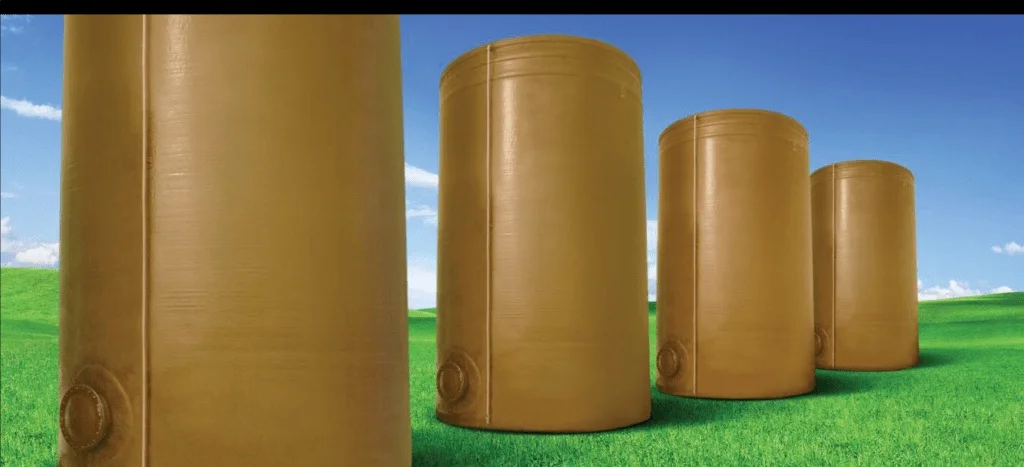
Growers across Washington are under constant pressure to get more out of every acre while keeping input costs and environmental impact under control. One of the most reliable ways operations are meeting that challenge is by switching to liquid fertilizer storage tanks for holding, blending, and dispensing crop nutrients. From the irrigated cropland of the Columbia Basin to the vineyards of the Yakima Valley and the wheat country of the Palouse, liquid fertilizer tanks in Washington have become a standard part of how growers plan their season.
Unlike dry fertilizer handling, a liquid system lets an operation dial in exactly how much nutrient goes down, exactly where it’s needed, and exactly when the crop can use it. That shift alone is why so many farms, custom applicators, and ag retailers across the state have moved their nutrient programs onto tanks built specifically for this job.
Why Washington Growers Are Switching to Liquid Fertilizer Tanks
- Application accuracy. A liquid system gives operators fine control over dosing, so crops receive nutrients matched to their actual growth stage instead of a one-size-fits-all rate. That precision cuts down on both under-feeding, which limits yield, and over-application, which wastes product and stresses the plant.
- Even coverage across the field. Dry fertilizer can pile up in low spots or blow off target in wind, leaving patchy results. Liquid formulations move through modern dispensing equipment in a consistent stream, so nutrient levels stay uniform from one end of the field to the other.
- Faster turnaround at scale. A well-designed liquid fertilizer storage tank setup lets a crew load, mix, and apply product with far less handling than bagged or bulk dry product requires. On large Washington operations, that time savings adds up across an entire season of passes.
- Lower environmental risk. Because application rates can be tuned so precisely, liquid systems reduce the amount of unused nutrient left on the surface to run off into ditches, streams, or groundwater – an increasingly important consideration for operations working near the state’s waterways.
- Better nutrient uptake. Plants generally take up liquid nutrients faster than granular ones, since there’s no need to wait for a solid to dissolve into the soil solution. For growers chasing tight application windows, that faster uptake can make a real difference in crop response.
Built-In Technology Makes Nutrient Management Smarter
Newer liquid fertilizer storage tanks are frequently paired with GPS guidance and automated control systems, letting an operation vary its rate zone by zone based on soil sampling and yield history rather than applying a flat rate across an entire field. Remote monitoring hardware can also report tank levels and flow rates back to the farm office in real time, so a manager knows exactly how much product is on hand and how an application is progressing without walking the field.
Sizing a Tank for Your Operation
No two Washington operations look the same – a small diversified vegetable farm west of the Cascades has very different storage needs than a large dryland wheat operation in Eastern Washington or a commercial ag retailer supplying dozens of customers. Tank capacity should be matched to your acreage, application schedule, and how often you’re able to restock product. Undersized storage means more frequent refill trips and logistics headaches during your busiest weeks; oversized storage ties up capital and yard space you may not need. A good supplier will walk through your acreage, crop mix, and application calendar with you before recommending a size.
Liquid Fertilizer Tanks for Sale in Washington
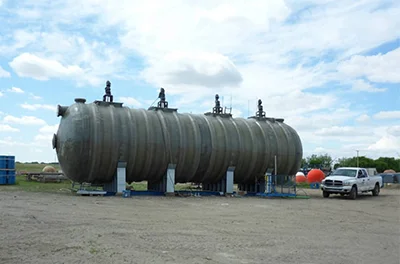
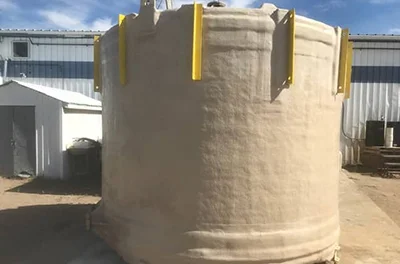
All standard FRP Mocoat Fiberglass above-ground tanks are engineered to store liquid fertilizers under hydrostatic loads with a specific gravity of up to 1.4, making them a dependable choice for the corrosive nutrient solutions used across Washington agriculture.
- Lightweight and easy to install. An above-ground fiberglass tank weighs a fraction of what an equivalent steel tank weighs, yet delivers a higher strength-to-weight ratio, which simplifies transport and setup on-site.
- Corrosion-resistant. FRP Mocoat Fiberglass storage tanks don’t corrode the way metal tanks can when holding aggressive liquid fertilizer chemistry, which removes a major source of leaks and protects the soil and groundwater around your storage site.
- Long service life. Time-accelerated testing shows FRP composite tanks can remain in service for 80 years or more, and low ongoing maintenance needs make that lifespan an asset rather than a liability.
- Portable by design. Our liquid fertilizer tanks are built for easy relocation, which matters for operations that lease ground, rotate storage sites, or expand their footprint from year to year.
- Minimal upkeep. Durable materials and a straightforward design mean less time and money spent on repairs over the tank’s working life.
- A range of standard and custom sizes. Whether you need a compact tank for a single field operation or a large-capacity system for a multi-site retail supply yard, there’s a configuration sized to fit.
Working With a Liquid Fertilizer Storage Tanks Manufacturer You Can Rely On
At FRP Mocoat Fiberglass, we’ve built our reputation as a liquid fertilizer storage tanks manufacturer around one idea: the tank sitting in your yard has to perform, season after season, without surprises. Every unit is engineered to hold up under the specific gravity and chemical demands of real fertilizer programs, not just clean water, and backed by materials that are built to outlast the equipment around them.
As one of the liquid fertilizer storage tank suppliers serving customers across the Pacific Northwest, we work directly with growers, custom applicators, and ag retailers throughout Washington to spec tanks that match actual field conditions rather than a generic catalog size. That means a conversation about your acreage and application plan before a quote, not after.
Get a Quote on Liquid Fertilizer Storage Tanks
Whether you’re setting up a new storage site or replacing an aging steel tank that’s finally started to leak, our team can help you find the right fit.

Liquid Fertilizer Storage Tanks
Above-Ground LF-Series
| 14′ DIAMETER | Tank Height | Volume (Imp. Gal.) | Approx Weight (Lbs) |
| AGLF20000 | 19′ | 16,667 (20,000 USG) | 4,750 |
| AGLF30000 | 27′ 8″ | 25,000 (30,000 USG) | 6,350 |
| AGLF42000 | 37′ 11″ | 35,000 (42,000 USG) | 9,150 |
| AGLF50000 | 45′ | 41,667 (50,000 USG) | 10,500 |
Frequently Asked Questions
What makes fiberglass a better choice than steel for liquid fertilizer storage?
Fiberglass doesn’t corrode when exposed to the aggressive chemistry in liquid fertilizer, so it avoids the pitting, rust, and eventual leaks that steel tanks are prone to over time. It’s also considerably lighter, which keeps transport and installation costs down without sacrificing strength.
How do I know what size liquid fertilizer storage tank I need?
Capacity should be based on your total acreage, your application rate per pass, and how frequently you can realistically restock. A supplier who asks about your crop mix and season schedule before quoting a size is generally going to get you closer to the right fit than a one-size-fits-all recommendation.
Are liquid fertilizer tanks in Washington subject to specific storage regulations?
Requirements can vary by county and by the specific nutrient product being stored, particularly around secondary containment and proximity to waterways. It’s worth checking with your local conservation district or Washington State Department of Agriculture before finalizing a storage site plan.
Can a fiberglass tank be moved once it's installed?
Yes. One of the advantages of these liquid fertilizer tanks is that they’re designed for relocation, which is useful for operations that lease land, shift storage between sites seasonally, or expand capacity as the operation grows.
How long does a fiberglass liquid fertilizer storage tank typically last?
Time-accelerated testing on FRP composite construction points to a service life of 80 years or more when the tank is properly installed and maintained, which is significantly longer than most metal alternatives.
Do you offer custom tank sizes, or only standard capacities?
Both. Standard sizes cover most common operations, but custom capacities and configurations are available for sites with unusual space constraints or larger multi-site storage needs.
Where can I find liquid fertilizer tanks for sale near me in Washington?
FRP Mocoat Fiberglass supplies customers throughout Washington directly. Reach out with your acreage and application details, and we’ll recommend a tank size and configuration suited to your operation.