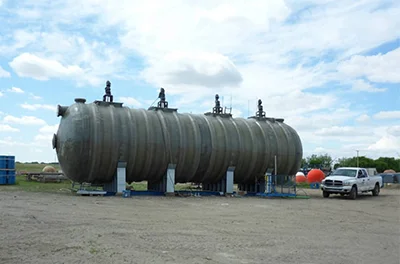
What Are Flocculation Tanks?
Flocculation tanks are critical components in water treatment systems, designed to promote the aggregation of fine suspended particles into larger clumps – or “flocs” – that are easier to separate from the water. This is achieved by adding coagulants and using mechanical or hydraulic mixing to encourage particle collisions.
Once the floc forms, it can be removed through filtration or sedimentation in downstream processes, improving water clarity and quality.
Applications of Flocculation Tanks in Washington
- Municipal wastewater treatment plants
- Drinking water purification systems
- Stormwater runoff treatment
- Mining and mineral processing
- Food and beverage processing
- Pharmaceutical manufacturing
- Chemical production facilities
- Pulp and paper industries
No matter the application, our tanks are engineered to meet regulatory standards while delivering efficient solids separation.
Materials That Withstand Harsh Conditions
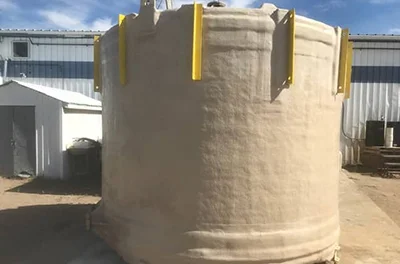
- Fiberglass Reinforced Plastic (FRP) – Lightweight, durable, and resistant to a wide range of chemicals. Ideal for outdoor or corrosive environments.
- Polyethylene (PE) – Offers chemical resistance and structural integrity.
- Cross-Linked Polyethylene (XLPE) – Provides superior resistance to high temperatures and tough operating conditions.
- Steel-lined with PE – Combines structural strength with chemical protection.
Our FRP flocculation tanks are especially popular in Washington due to their weather resistance, minimal maintenance needs, and customizability.
Built for Performance
- Efficient Mixing Systems – Hydraulic or mechanical mixers promote even distribution of coagulants and consistent floc formation.
- Custom Sizing – Engineered to match your plant's flow rate, treatment volume, and available space.
- Temperature Resistance – Suitable for high-temperature coagulant delivery, including alum at 52°C or higher.
- Full-Drain Designs – Options for conical or sloped bottoms to ease sludge removal.
- Level Monitoring – Choose from translucent walls, mechanical gauges, or electronic sensors for easy monitoring and integration with automation systems.
Easy Installation and Maintenance
- Accessible manways and clean-out ports
- Smooth interior surfaces to minimize residue buildup
- UV-resistant coatings for outdoor installations
- Custom configurations to fit tight or irregular spaces
Our tanks are available across Washington, with support from experienced technicians and engineers who understand local regulations and site conditions.
Custom Flocculation Tank Solutions in Washington
Every treatment system is unique. That’s why we offer fully customizable flocculation tanks tailored to your operation’s needs. From capacity and dimensions to chemical compatibility and installation requirements, our team works with you every step of the way.
Request a Quote Today
Frequently Asked Questions
Why are flocculation tanks important in water treatment?
Flocculation tanks improve the removal of fine solids, organic matter, and contaminants. By enhancing solids separation, they support better downstream treatment performance and help meet water quality standards.
Where are flocculation tanks commonly used?
Flocculation tanks are used in many applications, including municipal wastewater treatment, drinking water purification, stormwater treatment, industrial processing, and environmental remediation projects.
What materials are flocculation tanks made from?
Flocculation tanks are commonly manufactured from corrosion-resistant materials such as fiberglass reinforced plastic (FRP), polyethylene (PE), cross-linked polyethylene (XLPE), or steel lined with protective coatings. These materials are selected based on chemical exposure and operating conditions.
Are flocculation tanks suitable for harsh chemical environments?
Yes. Flocculation tanks are designed to handle aggressive treatment chemicals such as alum, ferric chloride, and polymers, making them suitable for demanding treatment processes.
How do flocculation tanks support regulatory compliance in Washington?
By improving solids removal and treatment efficiency, flocculation tanks help systems meet Washington State water quality and discharge regulations.
Do flocculation tanks require a lot of maintenance?
No. When properly designed and installed, flocculation tanks require minimal maintenance. Smooth interior surfaces and corrosion-resistant materials help reduce buildup and extend service life.