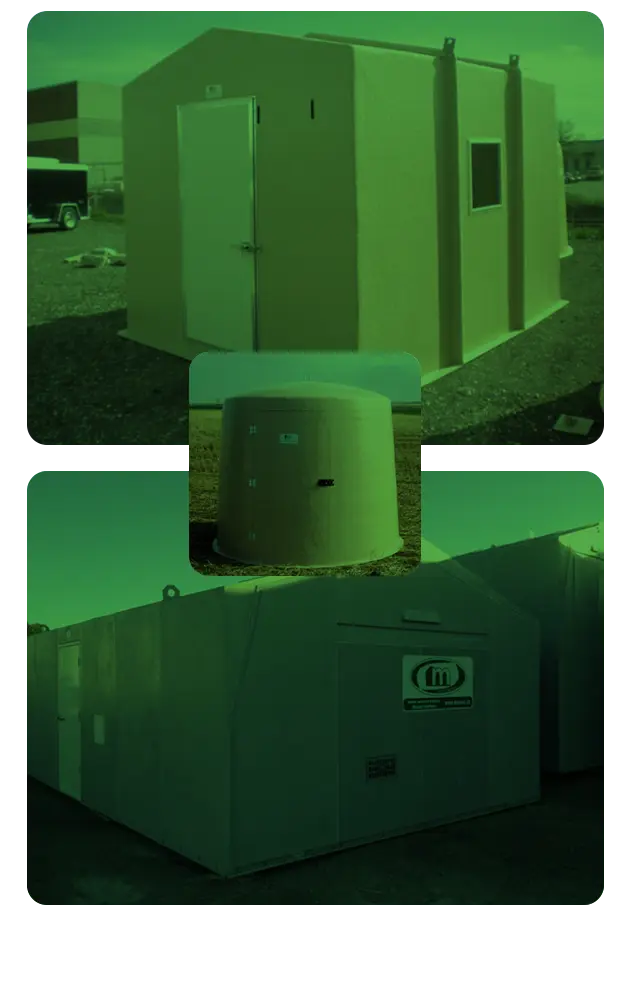
Buildings & Shelters
Home » Buildings & Shelters
FRP Buildings in Canada (Saskatchewan, Alberta, and Manitoba)
Key Properties of FRP Materials
- High strength-to-weight ratio. FRP materials are very strong while being lightweight, which allows for easier handling and installation.
- Corrosion resistance. Unlike traditional materials like steel, FRP does not corrode, making it ideal for environments exposed to moisture, chemicals, or salt.
- Durability. FRP structures have a long lifespan with minimal maintenance required.
- Flexibility. These materials can be molded into various shapes, allowing for innovative architectural designs.
- Non-conductive. FRP is non-conductive, making it suitable for use in environments where electrical insulation is critical.
Prefabricated Fiberglass Buildings to Protect Equipment
Prefab fiberglass buildings are a popular choice for protecting various types of equipment due to their durable, lightweight, and corrosion-resistant properties. These buildings can be quickly assembled on-site and provide a robust solution for housing and safeguarding sensitive and valuable equipment.
Key applications:
- Telecommunications. FRP shelters are used to house sensitive telecommunications equipment such as servers, routers, and other networking devices. These shelters protect against environmental factors and physical damage.
- Utilities and energy. Fiberglass buildings are ideal for enclosing pumps and other equipment in water treatment plants, ensuring protection from weather and corrosion. Prefab fiberglass buildings are used to protect gas and water metering equipment from environmental damage and unauthorized access.
- Oil and gas industry. Prefabricated fiberglass buildings provide a safe environment for control systems in oil and gas fields, protecting them from harsh environmental conditions. Fiberglass shelters are used for storing tools, parts, and other equipment necessary for oil and gas operations.
- Manufacturing and industrial. Fiberglass buildings protect industrial machinery from dust, moisture, and physical damage.
- Environmental monitoring. Fiberglass buildings can house delicate meteorological instruments, protecting them from adverse weather conditions. Prefabricated fiberglass buildings are used to protect air quality monitoring equipment from contamination and vandalism.
As a fiberglass shelter manufacturer in Canada (Saskatchewan, Alberta, and Manitoba), FRP Mocoat Fiberglass understands what FRP buildings need to be to satisfy every customer.
Installation and Use
Here’s what else you need to know about prefab fiberglass buildings:
- Minimal site preparation is required, as these buildings can be placed on various foundations including concrete slabs, gravel beds, or directly on the ground.
- Prefabricated buildings are delivered in sections or as complete units, ready for quick assembly. This approach minimizes labor expenses and shortens installation time.
- Additional features like HVAC systems, security locks, and custom shelving can be integrated during the manufacturing process or added later.
- Due to their lightweight nature, fiberglass buildings can be easily relocated if necessary, providing flexibility in changing operational needs.
Prefabricated fiberglass buildings offer a robust and versatile solution for protecting equipment in various industries, ensuring longevity and reducing maintenance costs while providing a safe and controlled environment for sensitive operations.
How Do Fiberglass Shelters Protect Sensitive Equipment?
Fiberglass shelters offer weatherproof, corrosion-resistant protection for equipment like generators, pumps, or communication systems. Their sealed, durable construction shields contents from UV exposure, moisture, and chemicals, ensuring long-term performance even in extreme climates.
Can Fiberglass Shelters be Customized for Specific Applications?
Absolutely. Fiberglass shelters can be tailored with ventilation, lighting, insulation, access points, and mounting hardware. They are frequently customized to meet the needs of electrical housing, fiber optic protection, or hazardous material containment.
How Long Do Prefab Fiberglass Buildings Last?
Prefab fiberglass buildings can last 30 years or more with minimal maintenance. Their resistance to rust, UV degradation, and chemical exposure makes them a long-term solution for both temporary and permanent structures in demanding environments.
How are Prefab Fiberglass Buildings Transported and Installed?
Prefab fiberglass buildings are lightweight and modular, allowing for simple transport via truck or trailer. On-site installation is quick and often doesn’t require heavy machinery, reducing labor costs and downtime compared to traditional construction.
FRP Mocoat Fiberglass Ltd - Fiberglass Shelter Manufacturer
FRP Mocoat’s commitment to our customers has allowed us to supply more than 18,000 wellhead shelters and fiberglass buildings throughout Canada and the United States.
FRP Mocoat’s diversity of building solutions is a key reason for our success. We pride ourselves on having a solution to just about whatever building size/option that would be required.
FRP Mocoat insulated double-wall shelters were designed and developed by FRP Mocoat in 1968 for oil field wellheads and metering stations. Their use today has been expanded to meet a diverse range of applications, including water injection wells, pump stations, meter runs, instrumentation buildings, storage buildings, guardhouses, storage wastewater, & containment buildings to name a few.
Our company provides both standard and custom fiberglass shelters, buildings, and enclosures for a variety of industries. Utilizing advanced technology, we deliver high-quality and cost-effective fiberglass solutions to address diverse chemical and environmental challenges. Our sales and engineering teams collaborate with you to ensure your shelter meets the specific requirements of your application.
Are you looking for a trusted fiberglass shelter manufacturer in Canada? Then call our manager at (306) 329-4884 to get advice and choose the fiberglass buildings & shelters you need.
Frequently Asked Questions
What makes FRP buildings a smart choice for Western Canada’s climate?
FRP buildings are ideal for Saskatchewan, Alberta, and Manitoba because they withstand extreme temperature swings, heavy snow loads, and moisture without degrading. Their corrosion resistance and durability ensure long-term performance even in harsh prairie environments.
How do fiberglass buildings compare to traditional steel or wood structures?
Unlike steel or wood, fiberglass buildings do not rust, rot, or warp. They require far less maintenance and offer a longer lifespan, making them a cost-effective alternative for industrial and commercial applications.
Where are fiberglass shelters most commonly used?
Fiberglass shelters are widely used in oil and gas sites, water treatment facilities, telecommunications infrastructure, and agricultural operations. They protect critical equipment from weather, vandalism, and environmental damage.
What industries benefit the most from FRP shelters?
FRP shelters are especially valuable in industries like energy, utilities, environmental monitoring, and manufacturing. Their non-conductive and corrosion-resistant properties make them ideal for housing sensitive or hazardous equipment.
Why choose experienced fiberglass shelter manufacturers in Canada?
Established fiberglass shelter manufacturers understand regional climate challenges and regulatory requirements. They can design shelters that meet specific insulation, durability, and safety standards needed across Canadian provinces.
What are the advantages of prefabricated fiberglass buildings over on-site construction?
Prefabricated fiberglass buildings reduce construction time, labor costs, and site disruption. They arrive ready to install and can be operational much faster than traditional builds.
Are FRP buildings environmentally friendly?
Yes, FRP buildings are considered environmentally friendly due to their long lifespan, low maintenance requirements, and resistance to degradation. This reduces the need for replacements and minimizes material waste over time.
What maintenance is required for fiberglass buildings?
Fiberglass buildings require minimal maintenance. Routine inspections and occasional cleaning are usually sufficient, as they resist corrosion, pests, and weather-related damage.